 Regulated firm
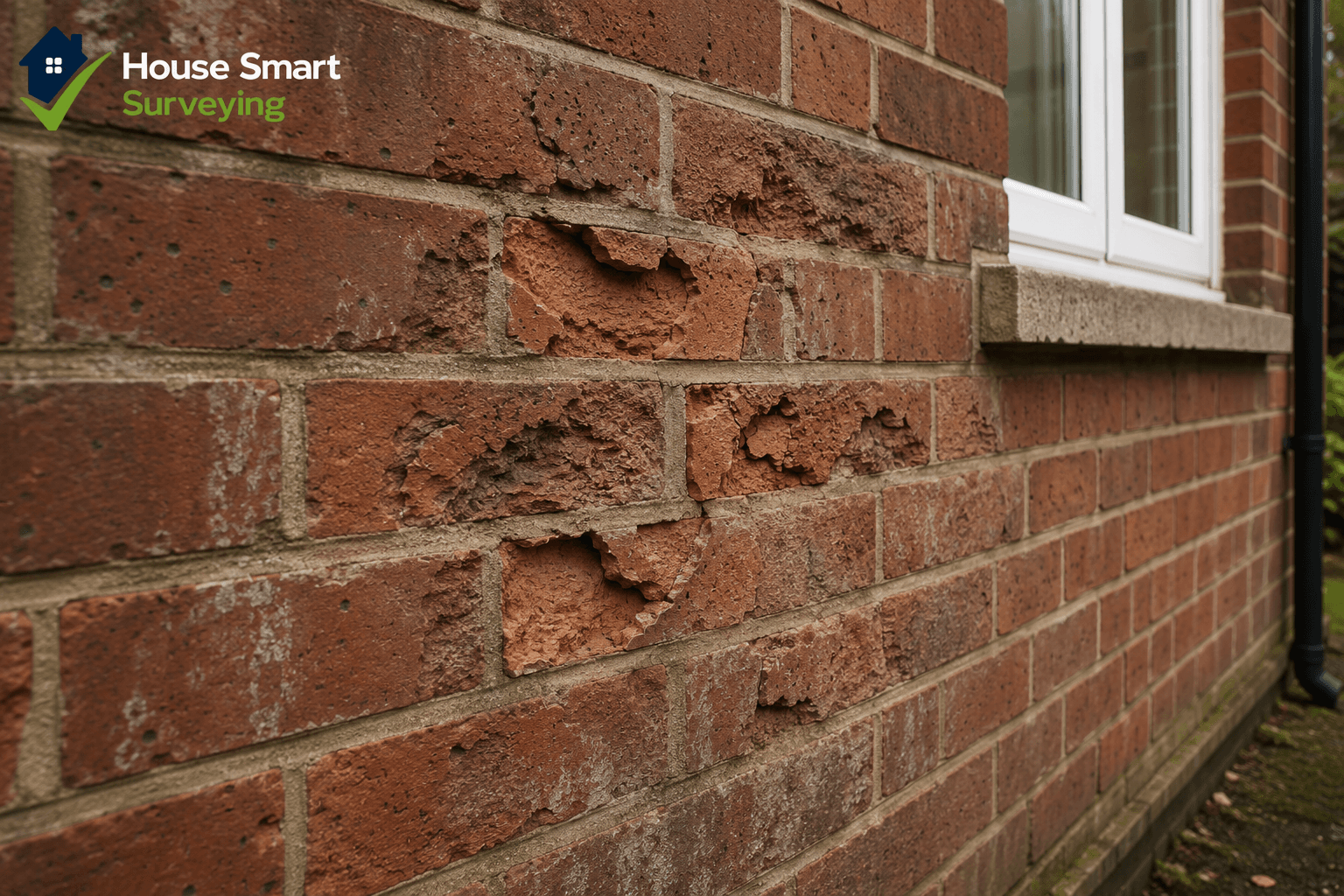
Perished and spalling brickwork: causes, costs, remedies
Spalling occurs when the face of a brick breaks away, usually because moisture has entered the brick and expanded through freeze-thaw cycles. Once the protective fired face is lost, deterioration accelerates rapidly and the wall’s weather resistance drops sharply. Isolated spalling on a chimney or a boundary wall is common and cheap to fix; widespread perishing across a main elevation can imply a significant rebuilding cost.
The most common culprits in the UK stock are: hard cement repointing on older soft handmade bricks, leaking or blocked gutters saturating a wall, and inappropriate modern masonry paint trapping moisture within the fabric. In every case the underlying issue is moisture that cannot escape, and identifying the mechanism is the essential first step.
Our surveyors assess the extent and cause of perished brickwork, distinguish cosmetic surface damage from structural concern, and advise on sympathetic repair: the right mortar mix, sourcing matching replacement bricks, and the correct sequence of works. We routinely see well-meaning repairs make the underlying problem worse, so getting the advice up front is worth doing.
Because perished brickwork on older properties usually points to solid-wall construction, moisture-management issues, and often historic ill-advised repairs, we normally recommend a Level 3 Building Survey where spalling is visible on inspection. A Level 2 will identify it; a Level 3 will characterise the cause.
Repointing soft period bricks with hard cement mortar is one of the most common, and most damaging, improvements we see. Lime mortar is usually the right answer.
What we look for on site
The right repair, and the wrong one
The right repair for perished brickwork on a period property is (1) fix the moisture source, (2) allow the wall to dry, (3) rake out defective joints, (4) repoint with lime mortar to match the original, and (5) replace individual perished bricks with sympathetic hand-picked matches. Where face loss is limited, brick slips or careful patching may be appropriate; where extensive, section rebuilding may be needed.
The wrong repair is a cement slurry, a sand-and-cement repoint, or a coat of “waterproofing” paint. All three trap moisture in the fabric and accelerate deterioration. We see this misapplied on Victorian and Edwardian stock every week, and it is one of the more expensive mistakes to reverse.
“A soft old brick and a hard modern mortar is a fight the brick always loses. Get the mortar right first, and half the perishing you see would never happen.”