 Regulated firm
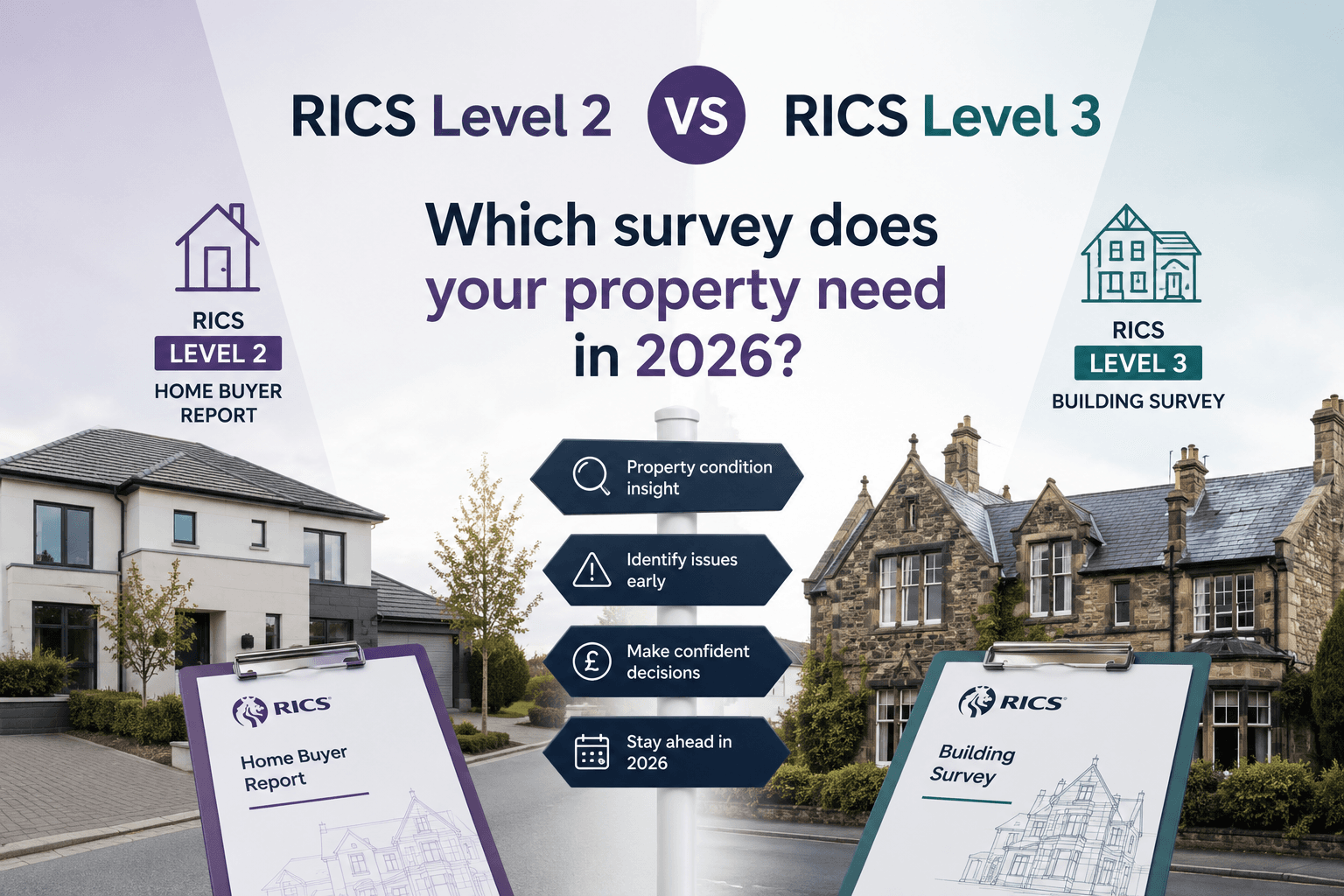
RICS Level 2: the HomeBuyer Report
A Level 2 Survey is built for conventional properties: standard construction, built from common materials, in reasonable overall condition, with no history of significant alterations or extensions. It covers visible defects in the roof, walls, windows, damp, insulation, and services such as electrics and plumbing, plus a market valuation. It's presented using a simple traffic-light system so you can act on the findings quickly.
This is the survey most buyers choose for typical post-1900 houses and flats that look, on the surface, to be in good shape.
RICS Level 3: the Building Survey
A Level 3 Survey is a far more detailed, forensic inspection. It's the right choice if the property is older (particularly pre-1900), listed or in a conservation area, built using unusual materials or non-standard construction, has been significantly extended or altered, shows visible signs of defects such as cracking or damp, or if you're planning major renovation work after purchase.
Rather than a simple traffic-light system, a Building Survey gives you detailed technical descriptions of defects, their likely causes, and recommendations for repair — along with budget costings where appropriate. It takes longer on-site and produces a longer, more technical report, but for the right property it's essential.
Why the choice matters more in 2026
With mortgage rates still elevated and household budgets tighter than in previous years, buyers have less room to absorb a costly surprise after moving in. Choosing too light a survey for an older or altered property risks missing exactly the kind of expensive defect — subsidence, structural movement, outdated wiring — that could derail your finances just as monthly mortgage payments are already stretched.
At the same time, there's no need to pay for a full Building Survey on a straightforward, modern semi-detached house in good condition. Matching the survey to the property means you get the right level of protection without overspending on the inspection itself.
A quick way to decide
Reading your answers
If you answered yes to any of these, a Level 3 Survey is almost certainly the safer option. If you answered no to all of them and the property looks to be in solid, ordinary condition, a Level 2 Survey should give you everything you need.
Every property is different, and sometimes the right survey level isn't obvious from photos or a single viewing. Our RICS-qualified surveyors are happy to talk through your specific property before you book, so you're paying for the right level of detail — not too little, and not more than you need.