 Regulated firm
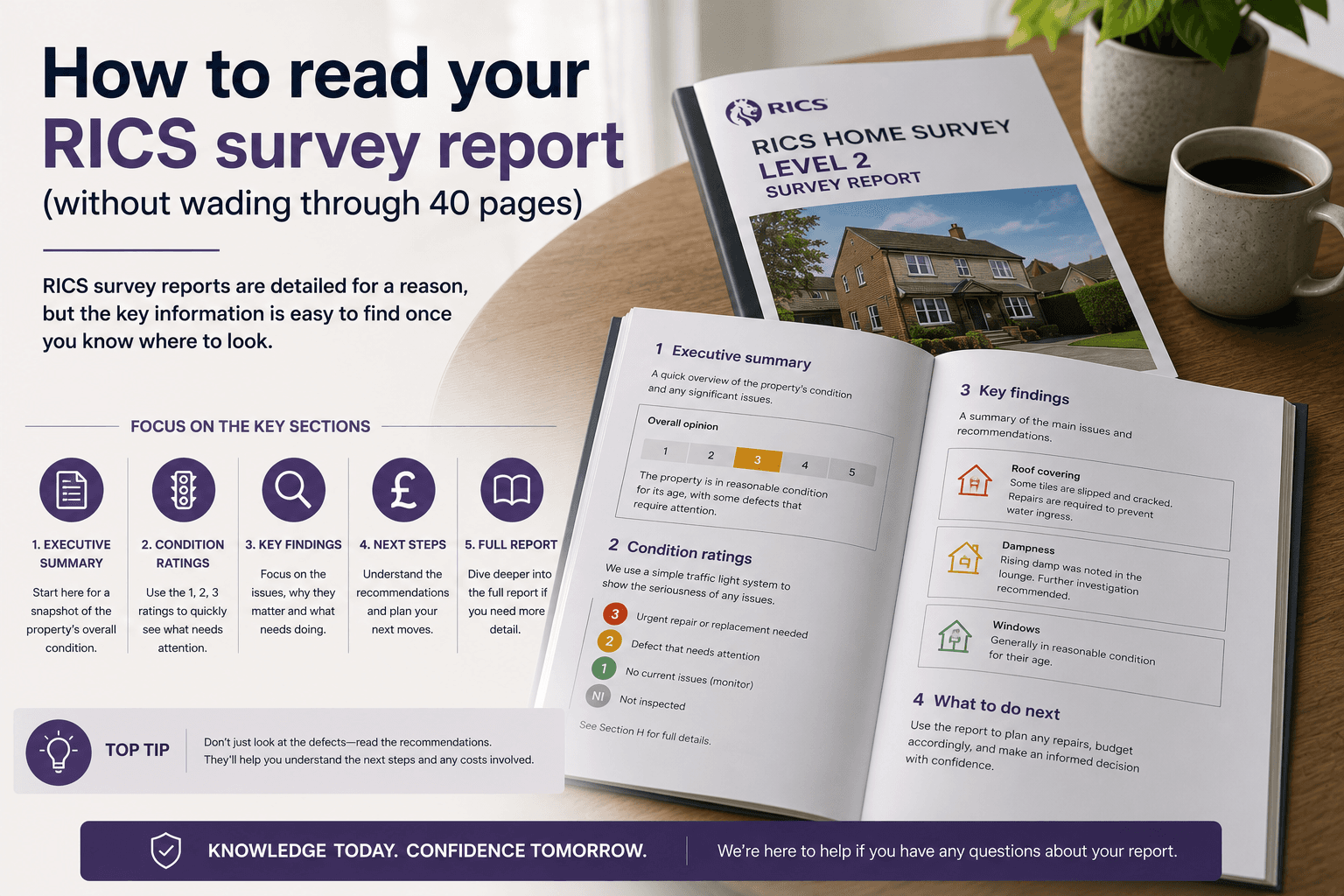
Your report has arrived. Where do you actually start?
Not at page one. RICS reports are written to a standard structure precisely so that you can find what you need quickly, but the layout rewards reading it out of order: summary first, then the condition ratings table, then the narrative for anything flagged amber or red, then legal matters. Everything else — the introduction, the general description, the limitations — is context you can skim once and never need again.
The follow-up call with your surveyor is included in every report we produce, and it is not a courtesy extra. It is where a page of dense technical language turns into three sentences you can actually act on. Book it before you make any decision based on the written report alone.
The three ratings, and what each one means
How the report is actually structured
After the introduction and general description of the property, you'll hit the condition ratings table — a room-by-room, element-by-element breakdown (roof, chimneys, walls, floors, damp, drainage, and so on) each given a green, amber or red rating. This table is the fastest way to see the shape of the property's condition at a glance.
Below that sits the narrative: paragraphs explaining why each amber or red rating was given, what caused it, and what your surveyor recommends. This is where the real information lives, and it's the section most buyers skip past on the first read because it looks like the driest part of the document. It's the opposite — it's the part written specifically for you.
The order to read it in
“Buyers who read the summary and stop there miss the report entirely. The summary tells you something is amber; the narrative tells you why, and that's the difference between a fair renegotiation and a guess.”
Turning a red rating into a plan
A red rating on its own is not a number, and it should never be treated as one until you have a quote against it. Take the specific defect described in the narrative to a suitably qualified contractor — a roofer for roof coverings, a damp specialist for damp, a structural engineer for movement — and get a written, itemised quote. That quote is what turns a rating into a negotiating position.
Where the report recommends a specialist referral, follow it before you exchange, not after. It is far easier to negotiate on a known cost than an unknown one, and vendors respond better to a specific figure than to a vague concern.
Every report includes a follow-up call with your surveyor — get in touch if you'd like to bring it forward.
A one-page reminder of what green, amber and red mean, and the questions to ask your surveyor about each.
Reading your report: FAQs
Your next step
If your report has just landed, don't try to absorb all of it in one sitting. Read the summary and the ratings table today, sit with the narrative tomorrow, and book the follow-up call before you make any decision. It is the single most useful ten minutes in the entire buying process.